
Aerobatics & Upset Training
Take Your Aircraft Control Skills to the Next Level
Build confidence. Improve aircraft control. Learn to perform primary aerobatic maneuvers and/or recover from unexpected attitudes in an upset aircraft scenario.
Aerobatic Training and Upset Training gives pilots an opportunity to develop aircraft handling skills that are not possible to achieve through normal flight operations.
This hands-on training focuses on aircraft control, energy management, situational awareness, and recovery techniques from acrobatic flight attitudes — all in a structured environment designed to challenge and develop your skills as a pilot.
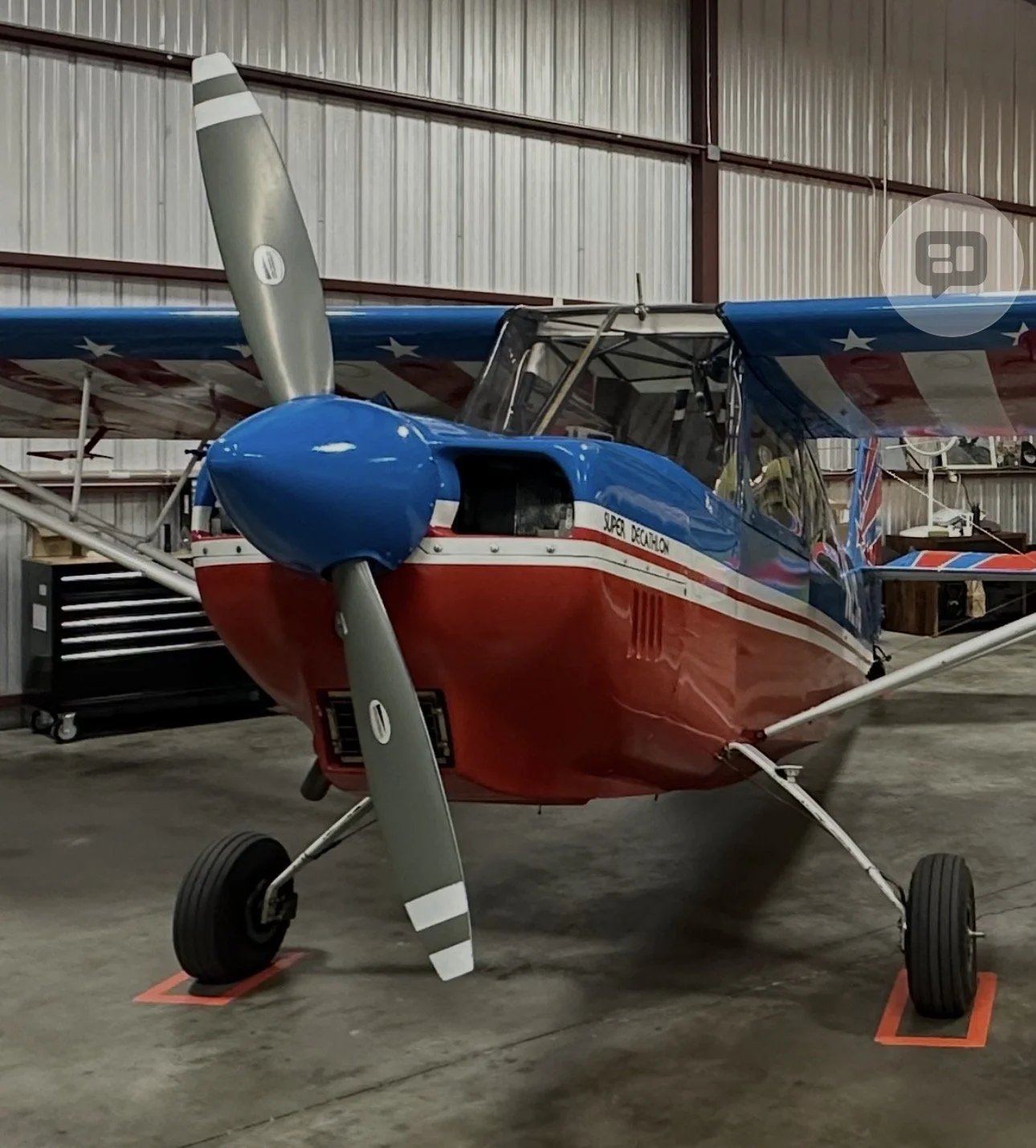
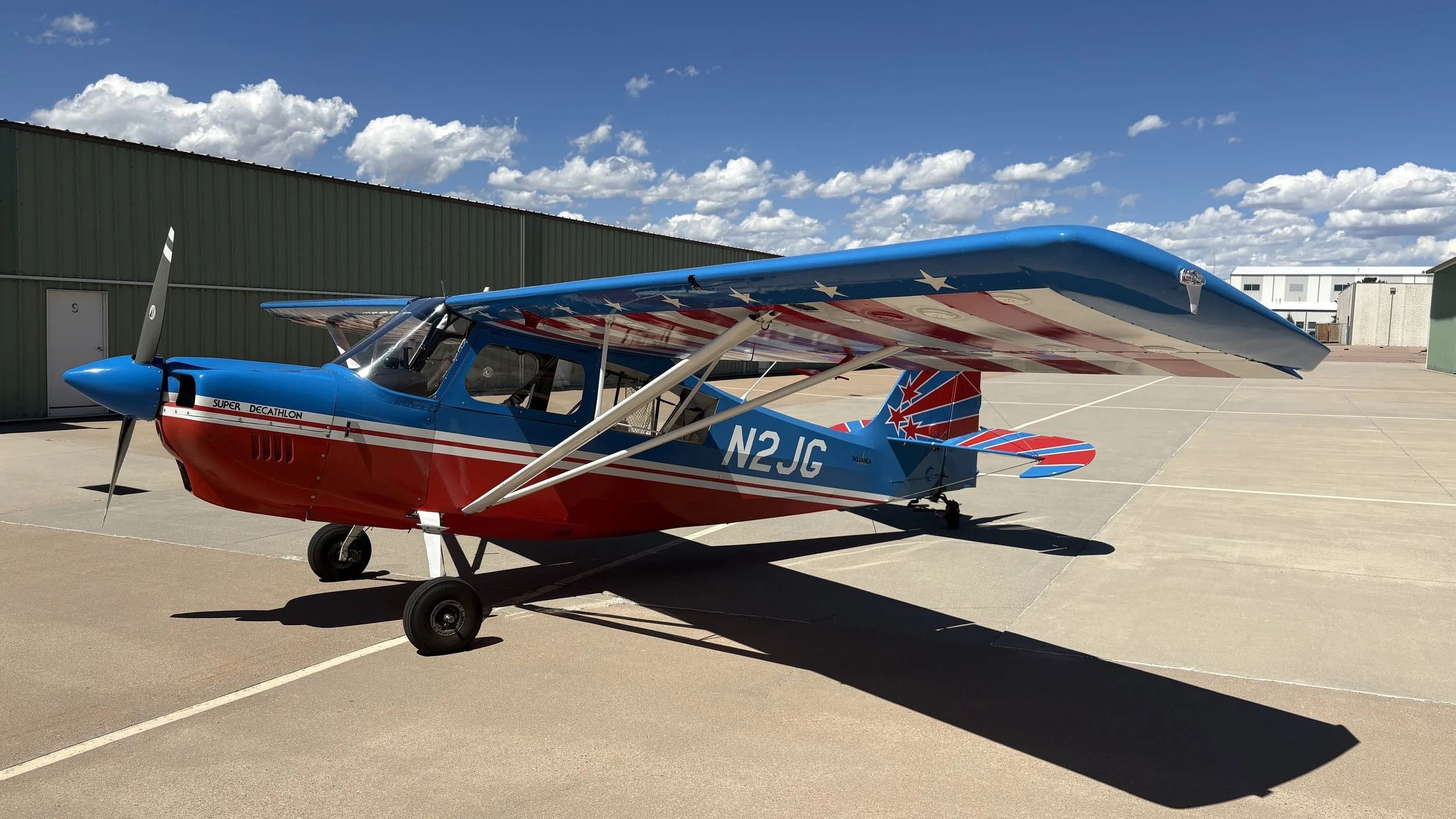
At WETSU Aviation, aerobatic training and upset training are conducted in the Bellanca 8KCAB Super Decathlon N2JG, an aircraft specifically suited to developing advanced stick-and-rudder skills.
You are able to become a more capable pilot when deliberately performing aerobatic maneuvers, or exposed to unexpected aircraft attitudes (upsets) where immediate recovery is required. .
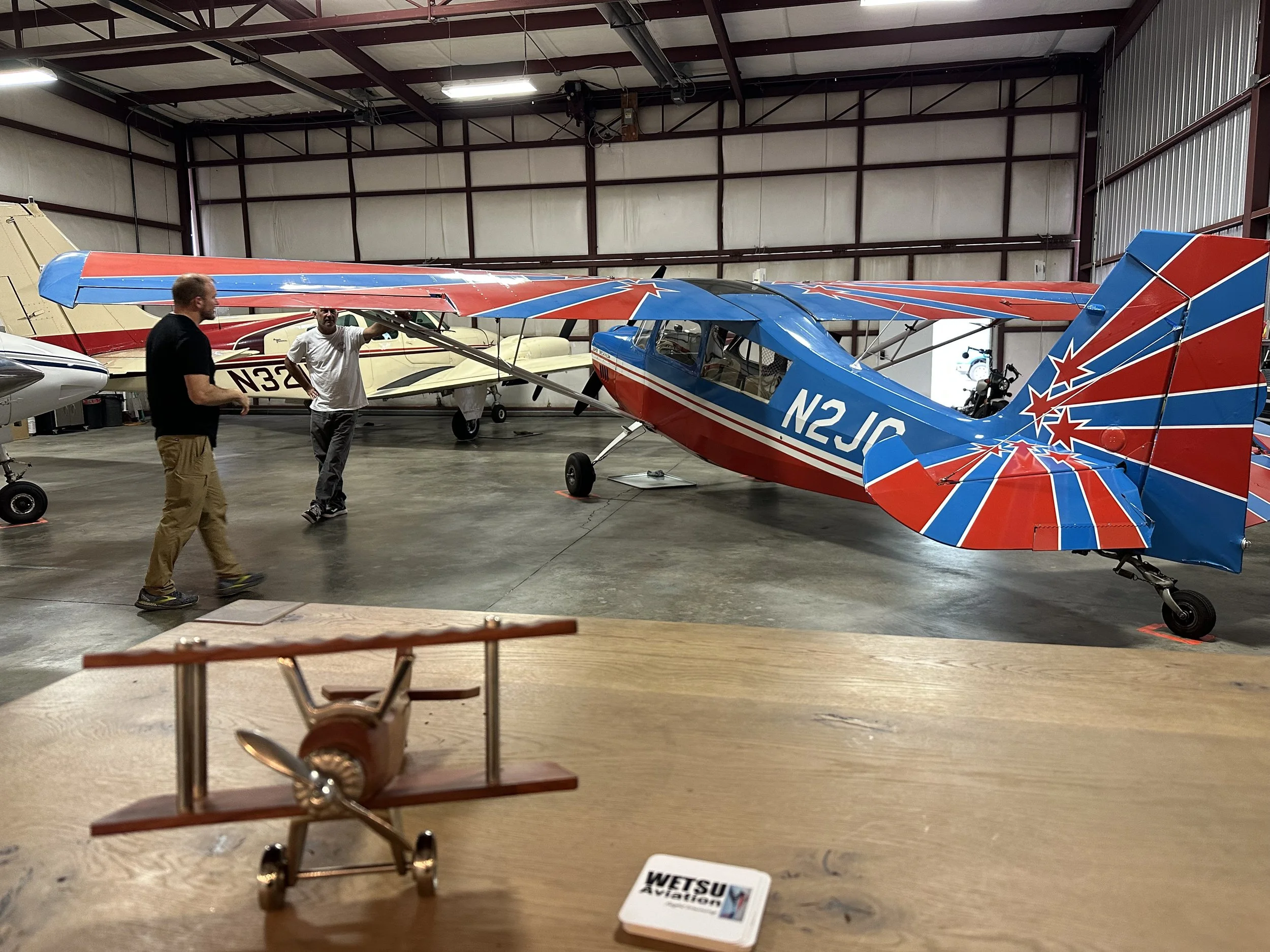
Train beyond the ordinary.
🧭
Train beyond the ordinary. 🧭
What You'll Learn - Aerobatic Training
Aerobatic training at WETSU Aviation can help pilots develop:
More precise aircraft control
Better coordination of aileron, elevator and rudder
Improved energy awareness and management
Greater understanding of aircraft attitude and flight path
Recognition of airspeed variations, G-load and energy state
Improved spatial orientation
Familiarity with abnormal flight attitudes
Controlled entry and recovery from appropriate aerobatic maneuvers
Greater confidence operating the aircraft throughout its approved flight envelope
Aerobatics are planned maneuvers. Each maneuver is briefed before it is flown, performed within the aircraft's operating limitations, and introduced according to the pilot's experience and proficiency.
Precision Aircraft Control & Energy Management
Build a stronger understanding of the airplane through precise control inputs, coordination in abnormal flight attitudes and energy awareness.
Key Flight Skills:
Pitch, roll and yaw coordination
Airspeed control
Advanced precision maneuvering
Energy management
Smooth, deliberate control inputs
Practical Benefit:
Develop a more precise understanding of how control inputs, attitude, airspeed and energy work together throughout a maneuver.
Stalls, Spins & Unusual Attitudes
Explore how an airplane behaves as it approaches and exceeds normal flight attitudes, with an emphasis on recognition, awareness and appropriate maneuvering techniques.
Key Flight Skills:
Spin awareness and spin entry characteristic
Visual and instrument uses to provide awareness
Practical Benefit:
Develop the ability to recognize changing aircraft attitudes and energy states and respond with deliberate, coordinated control inputs.
Aerobatic Maneuvers & G-Load Management
Progress into aerobatic flight while learning how to manage attitude, energy, coordination and G-loading throughout each maneuver.
Key Flight Skills:
Aerobatic maneuver preparation and entry
Spins
Loops
Aileron rolls
Immelmanns
Split-S
Cuban / ½ Cuban 8s
Other maneuvers appropriate to the aircraft and training objectives
G-load awareness and management
Maneuver recovery and energy control
Practical Benefit:
Learn to plan and execute aerobatic maneuvers enhancing awareness of aircraft attitude, energy, coordination and control inputs.
Specific maneuvers are subject to aircraft limitations, instructor assessment, pilot experience and the objectives of the individual flight.
Advanced Aircraft Handling & Pilot Proficiency
Bring the skills together through increasingly precise and deliberate flight exercises designed to develop overall aircraft handling proficiency.
Key Flight Skills:
Precision maneuvering
Energy and attitude management
Spatial orientation
Control coordination
Decision-making during maneuvering
Recognizing changing flight conditions
Returning the aircraft to desired flight conditions
Practical Benefit:
Build a deeper understanding of aircraft behavior and develop the control discipline and situational awareness that can complement everyday flying and upset-prevention training.
What You'll Learn - Upset Prevention & Recovery Training
When the Airplane Surprises You With an Uncommanded Attitude
An upset is fundamentally different from an aerobatic maneuver.
Aerobatics are planned. An upset is an unexpected departure from the intended flight path or attitude.
Upset training is designed to help pilots develop the ability to recognize developing loss of control, understand what the airplane is doing, and respond with appropriate control inputs to regain a desired flight condition.
At WETSU Aviation, upset training uses the Super Decathlon as a platform for developing aircraft-control skills in a structured training environment.
The emphasis is not on performing aerobatics.
The emphasis is on recognition, appropriate recovery and returning to controlled flight.
Upset training focuses on developing:
Recognition of developing upsets
Aircraft attitude awareness
Energy awareness
Nose-high and nose-low recognition
Bank-angle awareness
Appropriate control responses
Spatial orientation
Loss-of-control prevention
Decision-making under changing conditions
Returning the aircraft to controlled flight
The objective is not to memorize a single action to recover from every situation, but to assess the situation and apply the best action to achieve a successful outcome from the upset condition.
Aircraft Control & Energy Awareness
Build a strong foundation in aircraft attitude, control inputs, energy management and coordinated flight.
Key Flight Skills:
Pitch, bank and yaw coordination
Attitude and airspeed awareness
Power and energy management
Outside visual references and instrument cross-check
Recognizing changes in aircraft energy and flight path
Practical Benefit:
Develop a better understanding of how the airplane responds as attitude, energy and control inputs change.
Recognizing & Preventing Upsets
Learn to recognize the early signs of an aircraft moving away from the intended flight path before the situation develops further.
Key Flight Skills:
Recognizing developing situations that could result in an upset condition
Decision making to avoid potential upset scenarios
Unusual attitudes
Excessive bank and pitch
Flight-path and energy awareness
Spatial-orientation challenges
Practical Benefit:
Develop the ability to identify deviations early and take deliberate action before they become more significant.
This is hands-on flight training, not simply a classroom discussion.
Your instructor will introduce each maneuver or concept, demonstrate the appropriate techniques, and then allow you to practice under instruction.
Training is progressive. We start with the fundamentals and build toward more advanced aircraft handling as your proficiency develops.
The goal is not simply to perform aerobatic maneuvers.
The goal is to become a more capable, confident, and precise pilot.
The Training Experience
Who Is This Training For?
Aerobatics & Upset Training can be valuable for pilots who want to:
Improve overall aircraft handling skills
Build confidence in unusual attitudes
Develop greater precision and coordination
Experience aerobatic flight in a structured training environment
Improve their understanding of aircraft energy management
Practice recognizing and recovering from developing upsets
Challenge themselves with advanced aircraft maneuvering
Become more comfortable outside their normal flight envelope
Whether you're looking to sharpen your existing skills or experience aerobatics for the first time, the training can be tailored to your experience level and goals.
Why Aerobatics?
Normal flight training teaches pilots how to operate an aircraft within a relatively predictable range of attitudes and flight conditions.
Aerobatic training provides an opportunity to deliberately explore aircraft control and energy management in a structured environment.
You learn what the aircraft feels like as its attitude changes and the energy state varies rapidly — and, just as importantly, how to recognize what is happening and respond with deliberate control inputs.
Experience builds understanding. Understanding builds confidence.
A Progressive Training Program
1 — Foundations
Establish aircraft control, coordination, attitude awareness, and energy-management fundamentals.
2 — Aircraft Upsets
Explore unusual attitudes and develop recognition skills before progressing to recovery techniques.
3 — Recovery Techniques
Practice appropriate responses to nose-high, nose-low, stall, and other upset scenarios.
4 — Aerobatic Maneuvers
Build aircraft control skills through progressively more advanced aerobatic maneuvers.
5 — Advanced Aircraft Handling
Apply energy management, coordination, and precise control through increasingly demanding maneuvers.
6 — Real-World Application
Connect the skills developed during training to everyday pilot decision-making, situational awareness, and loss-of-control prevention.
Train With Purpose
Aerobatics is very exciting.
Upset training is demanding and can be very challenging.
But the real value comes from developing a deeper understanding of aircraft attitude, energy, control, and your own responses as a pilot.
Every maneuver is an opportunity to become more precise.
Every recovery is an opportunity to build experience and develop deeper understanding
Every flight is an opportunity that can and will enable your becoming a better pilot.
Ready to Take Your Flying Further?
Experience Aerobatics & Upset Training for yourself.
Contact us to discuss your experience level, training goals, aircraft, and available training options.